Strong relationships are valuable assets, and maintaining them should always be a priority. In a business setting, addressing mistakes professionally ensures issues are resolved without damaging trust or collaboration. Errors are inevitable—figures may be inaccurate, arguments flawed, and even opinions or beliefs misinformed. However, not every mistake needs to escalate into a confrontation, nor should it damage someone’s professional image. How do you correct errors in a way that fosters mutual respect?
It’s possible to point out errors respectfully without undermining a colleague’s credibility. Choosing the right words can help correct mistakes, preserve dignity, and maintain professional relationships. Here are some tactful ways to address errors while avoiding unnecessary conflict:
I appreciate your perspective, but the data suggests otherwise
I think there might be a misunderstanding here—here’s another way to look at it.
Actually, I think you’ve got that mixed up.
I don’t think that’s right—let me explain why.
I understand your argument; however, there might be an error in your reasoning.
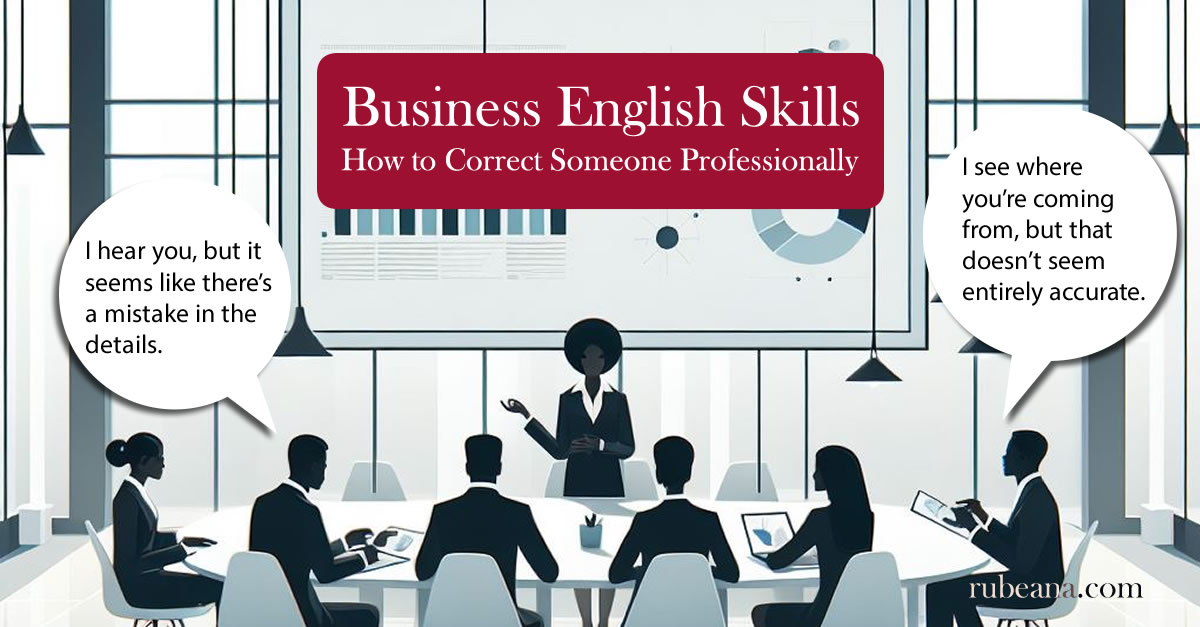
I hear you, but it seems like there’s a mistake in the details.
I see where you’re coming from, but that doesn’t seem entirely accurate.
Not quite—it’s more like this…
I respectfully disagree, as evidence points to a different conclusion.
Task 1
1. Which ones would you use with a close colleague?
2. Which ones are more appropriate for formal situations?
Task 2
1. Categorize the sentences provided above based on their degree of formality.
formal
semi-formal
informal